
Review · BIG ISLAND
Manta Ray Night Snorkel from Kona — Small Group
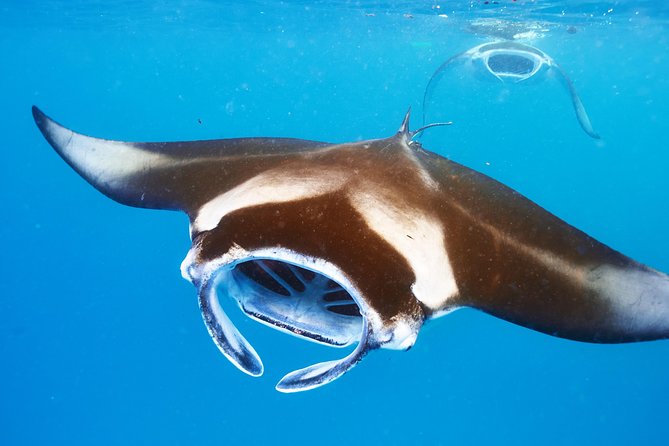
Mantas turn darkness into theater. This two-hour Kona outing lets you watch huge, vegetarian manta rays circle underwater lights and feed on plankton, often close enough to see their markings clearly. I like the small-group format and the fact that the crew can spend more time helping each person get comfortable. I also like the free return trip if no manta appears, though the strict 265-pound limit and physical demands deserve close attention before booking.
The evening begins at Honokohau Harbor and runs from sunset into moonlight. You receive a wetsuit, snorkel gear, flotation equipment, snacks, and drinks, but you need to bring a towel and warm clothing. The ride back can feel chilly after you leave the water, even in Hawaii.
Five things to know before booking
- Manta rays can pass within inches of you: The animals feed on plankton drawn to the boat’s underwater lights, often looping, rolling, and gliding beneath the group.
- The boat holds no more than 16 people: That keeps the experience more personal than a large party boat, with quicker help getting into the water.
- Captain Kris, Chris, Ryan, Tori, and other crew members earn strong praise: Guests describe calm assistance, clear explanations, and attentive help for nervous swimmers or people feeling seasick.
- The tour leaves from Honokohau Harbor: Arrive at least 15 minutes early, with the exact location and directions sent 24 hours before departure.
- Physical limits are firm: No children under five, no pregnant passengers, and a 265-pound maximum weight. The activity is not suitable for someone who cannot safely enter and leave the water or boat.
Why the Kona manta ray snorkel is so special
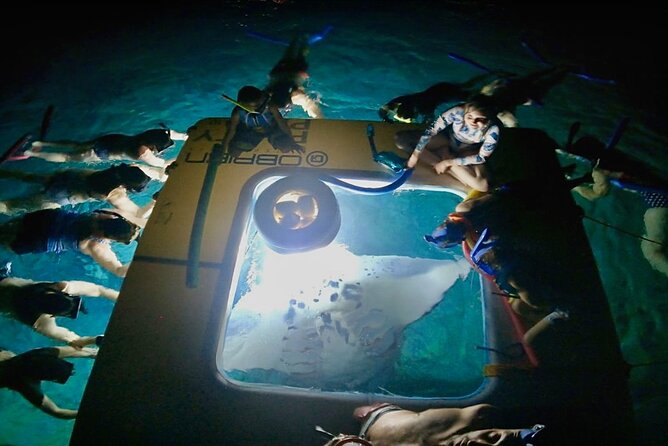
Kona’s manta ray encounter is not a typical daytime snorkel. You enter the water after sunset, when the crew sets up lights that attract plankton. The manta rays then arrive for their evening meal, making slow, graceful passes through the illuminated water.
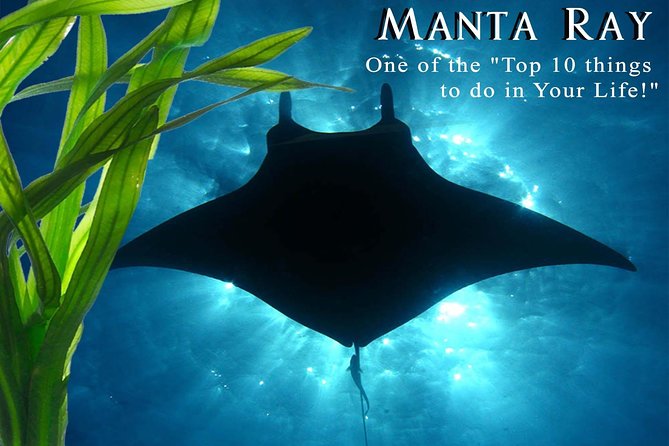
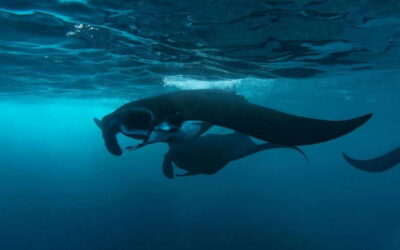
These are not hunting predators. They are vegetarian animals feeding on tiny plankton, and their broad wings can reach about 20 feet. That size can sound intimidating until you see how smoothly they move. Their motion is more like underwater flight than swimming, with wide turns, barrel rolls, and sudden rises toward the lights.
The nighttime setting adds a little drama without turning the activity into a stunt. You float at the surface with flotation gear while the manta rays move below and around you. Several accounts describe five or more rays feeding for roughly 40 to 45 minutes. Sightings vary, of course, but the tour’s purpose is clear: give you a good amount of time in the water rather than rush you through a quick pass.
I especially like the way this experience combines a sunset boat ride with the snorkel. You get a quiet change in mood as daylight fades, then the lights come on and the bay takes on a different character. If you are uneasy about swimming in the dark, the gradual transition helps. You are not dropped into black water without warning.
More Whale Shark and Manta Ray Snorkeling in Big Island:
- Big Island Manta Ray Night Snorkel
★ 5.0 · 5,656 reviews - Big Island: Kona Manta Ray Snorkel Tour in Keauhou Harbor
★ 4.5 · 2,465 reviews - KONA Manta Ray Night Snorkel – FREE re-ride if no Sightings
★ 5.0 · 2,212 reviews
Honokohau Harbor: where the evening starts
You make your own way to Honokohau Marina and Small Boat Harbor at 74 Kealakehe Parkway in Kailua-Kona. Plan to arrive at least 15 minutes before departure. The precise meeting details are sent 24 hours ahead, so check your phone before leaving for the harbor.
The harbor is more than a parking spot and a boarding point. It is where you meet the crew, receive the safety briefing, and get fitted with the wetsuit and snorkel equipment. The preparation matters because a night snorkel asks more of you than a casual swim from a beach.
The boat used for this small-group outing is described in guest accounts as a hard-hulled inflatable. That means you should expect a practical, open boat rather than a large vessel with a full cabin. The tradeoff is worthwhile for many people: the boat feels nimble, the group stays compact, and you can enjoy the sky on the ride home.
A small boat also means less room for unnecessary gear. Pack lightly and keep your towel and warm layer easy to reach. You will want them as soon as you climb aboard after the snorkel.
The ride toward Garden Eel Cove or Manta Heaven
The listed water stops are Garden Eel Cove and Manta Heaven. These names refer to the manta feeding area, not two separate sightseeing attractions that you visit one after another in a fixed sequence. The crew chooses the best available site for the conditions and manta activity.
This flexibility is one of the better reasons to leave from the Kona side of the island. The crew can choose between northern and southern locations instead of being locked into one area. One account specifically praised having a choice of two sites, since a tour departing farther south could not easily make the longer run north.
The ride also gives you time to settle in. Captain Kris, Captain Chris, Ryan, and other crew members have been praised for explaining what to expect before entering the water. The tone appears friendly and relaxed, but the safety message is taken seriously.
If you are prone to seasickness, take that possibility seriously. The boat ride is on open water, and one account describes Tori helping people who became seasick. That is reassuring, but it is still wise to prepare in advance and tell the crew if you feel unwell.
What happens at the manta site
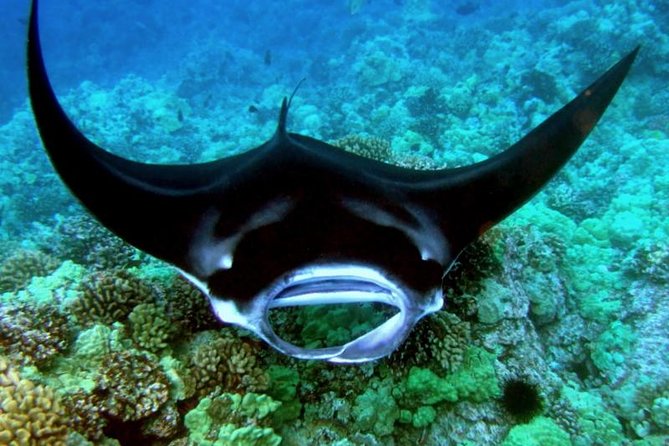
At the feeding site, the crew helps you enter the water with the provided wetsuit, mask, snorkel, and flotation device. You remain at the surface while the underwater lights attract plankton below.
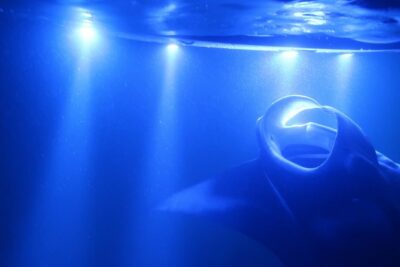
The manta rays do the rest. You may see them glide in wide circles, pass beneath the group, or roll toward the lights with their mouths open. Several accounts describe the rays coming within inches of the snorkelers. That is close enough for a remarkable view, but you should let the animals control the distance.
The time in the water is a major part of the value. Some accounts describe about 40 to 45 minutes of manta activity, while the total outing lasts about two hours. That leaves time for the boat ride, instructions, gearing up, and returning to the harbor. The crew does not appear to treat the feeding site like a quick photo stop.
A guide remains in the water with the group, while another crew member stays with the boat. That arrangement gives people reassurance if they are nervous, less confident swimmers, or simply adjusting to the dark. Guests also describe flotation support for children and adults who wanted extra help.
You should still be honest about your swimming ability. One account describes a passenger panicking after entering the water and needing immediate assistance. The crew responded quickly, but that is not a reason to exaggerate your skills. Tell the crew what you can and cannot do before leaving the harbor.
More Night Snorkeling Trips in Big Island:
- Manta Ray Night Snorkel at Kona, Big Island
★ 5.0 · 1,758 reviews - Glow of the Deep: Night Snorkeling with Manta Rays
★ 4.5 · 1,254 reviews - Manta Magic: Small-Group Manta Ray Night Snorkel in Kailua Kona
★ 5.0 · 1,141 reviews - Manta Ray Night Snorkel in Kona
★ 5.0 · 777 reviews
The crew and the small-group advantage
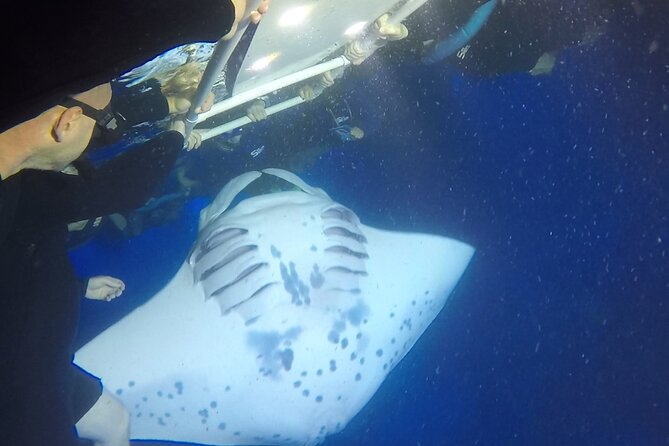
The most consistent praise goes to the crew’s calm, attentive approach. Captain Kris and Captain Chris are named often, along with Ryan, Tori, Gary, Mark, and other assistants. Names and staffing can change, but the pattern is useful: the operation puts real emphasis on help in the water, clear instructions, and making people feel safe.
A smaller group changes the experience in practical ways. You can get into the water faster, receive more direct help, and ask questions without shouting across a crowded boat. The crew can also keep an eye on individual comfort levels.
This matters if your group includes teenagers, a nervous swimmer, or someone who has never snorkeled at night. Several accounts describe family groups feeling well supported, including people who did not consider themselves strong swimmers.
The small boat is not luxurious. If you want a large vessel, indoor seating, or lots of space to spread out, this may feel basic. I see that as part of the bargain. At $123 per person, you are paying for access, gear, crew time, and a relatively personal outing, not a polished cruise ship experience.
Gear, snacks, and what you should bring
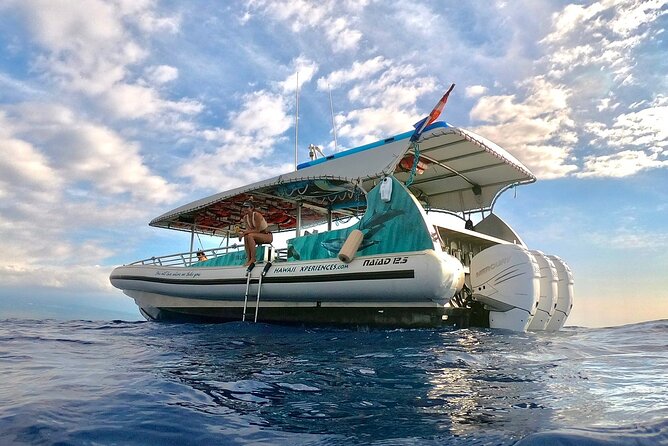
The tour provides a wetsuit, snorkel gear, flotation devices, island juices, soda, bottled water, and light snacks. The wetsuit is useful even in warm Hawaiian water because you may remain still at the surface for an extended period.
You need to wear a swimsuit and bring a towel. Pack a sweater, sweatshirt, or windbreaker for the trip back. This is not optional comfort advice. Wet skin, evening air, and an open boat can make the return ride surprisingly cool.
You may bring a GoPro, and one account describes Tori offering to take a camera under the platform for a different angle. Still, avoid letting photography distract you from the animals or from listening to the crew. If you do bring a camera, make sure it is secure and does not interfere with your mask, snorkel, or hands.
The supplied drinks and snacks are a nice practical touch after the water time. They do not replace dinner, so plan your evening meal around the tour schedule.
Safety, access, and firm restrictions
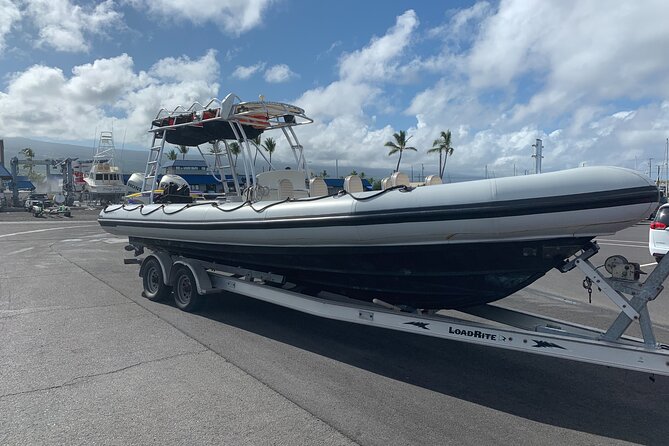
This is an active water outing, not a boat ride where you simply watch from the rail. You must be able to board the boat, enter the water, remain afloat with the provided equipment, and get back out.
The published weight limit is 265 pounds. Pregnant women are not permitted, and children under five cannot participate. The activity is not wheelchair accessible, and a person with limited mobility may find the boat and water entry impossible.
Read these conditions before paying. The restrictions are not minor paperwork details. One account describes a passenger reaching the snorkel site before the crew determined that water entry and exit were not safe. That situation was upsetting and avoidable with a careful check of the requirements beforehand.
Most people can participate, but most does not mean everyone. If you have concerns about mobility, balance, strength, or swimming, contact the operator before booking and explain your situation plainly.
Price, timing, and cancellation flexibility
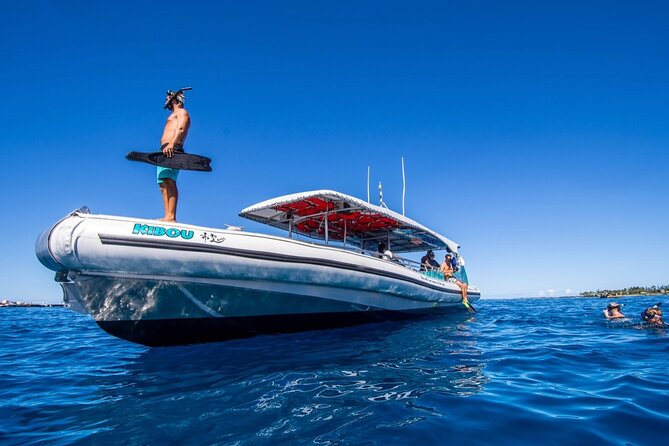
At $123 per person, this sits in a reasonable range for a specialized Kona water experience that includes equipment, wetsuit, flotation gear, drinks, snacks, and crew support. The strongest value comes from the small group and the time spent watching the manta rays, not from onboard comfort.
The listed duration is about two hours. Allow extra time for driving to Honokohau Harbor, parking, check-in, and changing afterward. The experience is offered in English and uses a mobile ticket.
It is smart to reserve ahead. This outing averages about 33 days of advance booking, which suggests that popular dates can fill early. I would avoid placing it on the final night of your island stay. Weather can cancel the trip, and having another evening available gives you a better chance to reschedule.
You can cancel for a full refund up to 24 hours before the start time. Cancellations or changes inside that window are not refunded or accepted. If poor weather or an insufficient number of bookings cancels the trip, you are offered another date or a full refund.
Who should book this Kona night snorkel
I would point this tour toward couples, families with older children, and anyone who wants a close look at manta rays without joining a very large boat. It also suits people who appreciate a crew that gives personal help rather than simply handing out equipment.
It is a good match if you can swim, handle a short open-water boat ride, and stay calm in nighttime conditions. Families with teenagers appear especially well suited, provided every person meets the age, weight, and physical requirements.
I would hesitate if you dislike open boats, get badly seasick, cannot safely manage a ladder or water entry, or expect a dry observation cruise. I would also skip it if the 265-pound limit or pregnancy restriction applies to anyone in your party.
Should you book it?
Yes, if you meet the physical requirements and want one of Kona’s most unusual evening activities. The combination of sunset, moonlight, underwater lights, and enormous manta rays offers something far more memorable than an ordinary snorkel.
The best reasons to choose this version are the capped group size, flexible choice of manta site, flotation support, and the possibility of a free return outing if no manta appears. Before you book, confirm the restrictions, bring warm clothing, and reserve well ahead.
If you prefer a large, comfortable boat with plenty of dry space, choose another style of excursion. If you want close manta viewing with attentive crew members and do not mind a basic open boat, this is a strong value at $123.
FAQ
Where does the manta ray night snorkel meet?
The meeting point is Honokohau Marina and Small Boat Harbor, at 74 Kealakehe Parkway in Kailua-Kona, Hawaii. Exact location details and directions are sent 24 hours before departure.
How long does the experience last?
The outing lasts approximately two hours, including the boat ride, preparation, time at the manta site, and return to the harbor.
What equipment is provided?
The tour provides snorkel gear, flotation devices, and wetsuits. Snacks, island juices, soda, and bottled water are also included.
What should I bring?
Wear a swimsuit and bring a towel. You should also bring warm clothing, such as a sweater or windbreaker, for the return ride after snorkeling.
Is there a guarantee that I will see manta rays?
If you do not see a manta ray, you can take a complimentary second outing.
Are there age, weight, or pregnancy restrictions?
Children under five cannot participate. The weight limit is 265 pounds, and pregnant women are not permitted on the tour.
What happens if weather cancels the tour?
If poor weather cancels the activity, you are offered a different date or a full refund. You can also cancel for a full refund if you do so at least 24 hours before the start time.
Just added around Big Island
- Waikoloa Catamaran Snorkel Sail Including Lunch★ 4.5 · 105 reviews
- 2-Hour Dolphin Watching and Double Reef with Snorkel in Hawaii★ 5.0 · 23 reviews
- Ultimate Ocean Encounters Midday Snorkel★ 4.5 · 43 reviews
- Two Tank Morning Reef Dive and Snorkel★ 5.0 · 54 reviews
- Sunset Cruise & Manta Night Snorkeling Charter★ 5.0 · 16 reviews
- Manta Ray Night Snorkel Tour in Kailua-Kona, Big Island★ 5.0 · 382 reviews
- Kona Luxury Catamaran Yacht Snorkel & Sail★ 5.0 · 40 reviews
- One Tank Manta Night Dive and Snorkel★ 5.0 · 56 reviews
Whale Shark and Manta Ray Snorkeling, compared.
️Nusa Penida by Private Boat – Snorkeling 4 spots, Swim with Mantas + Land Tour
Read our review →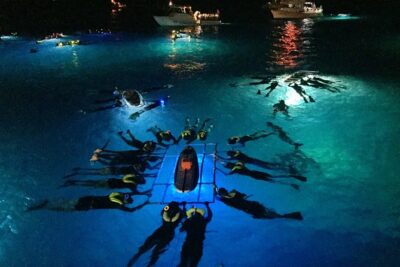
Kona Manta Ray Snorkel Tour in Keauhou Harbor
Read our review →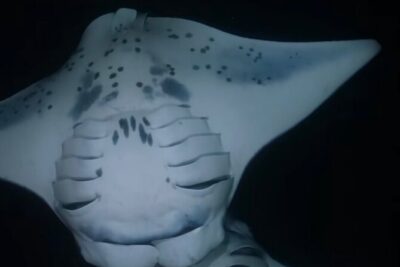
KONA Manta Ray Night Snorkel – FREE re-ride if no Sightings
Read our review →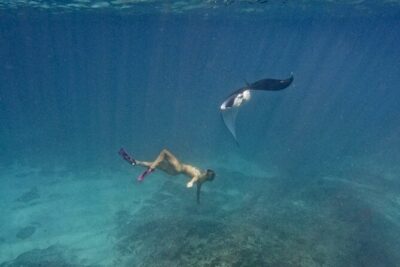
Nusa Penida day trip: boat, 4 snorkeling, Manta rays & Land tour
Read our review →
Bali/Nusa Penida: Manta Point Snorkeling & West Coast Tour
Read our review →
Glow of the Deep: Night Snorkeling with Manta Rays
Read our review →Browse the lists this tour appears in