
Review · USA
Kailua Kona: Manta Ray Night Snorkel Tour with Guide
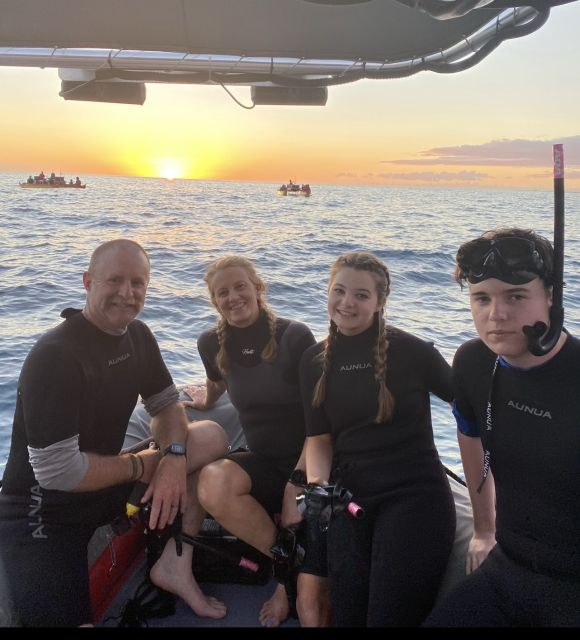
The ocean comes alive after sunset. This two-hour Kailua-Kona trip puts you in the water beneath bright lights, where plankton gathers and manta rays sweep close enough to seem unreal. I especially like the family-run operation and the care taken with safety, including CPR and lifeguard-certified crew and an in-water guide. I also like the smaller-boat feel, which can make the encounter calmer and less crowded.
The main catch is simple: you need to be a capable swimmer and snorkeler. You must climb a side ladder without assistance, and the boat ride can feel rough at night. People with back or heart problems, recent surgery, physical restrictions, or pregnancy should check with the operator before booking.
Key points to know before you book
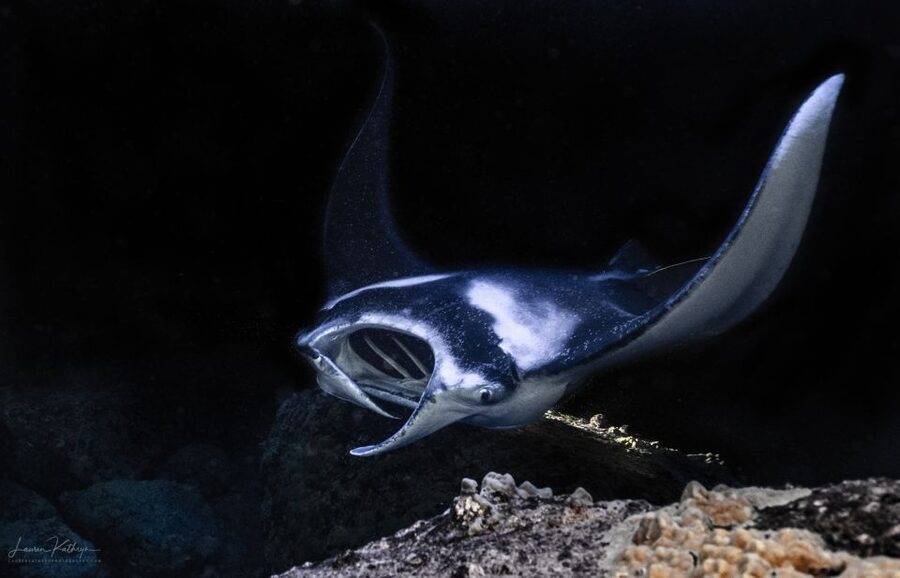
- Manta rays can reach a 16-foot wingspan: You may see several animals circling beneath the boat and gliding very close to the surface.
- At least 35 minutes in the water: The total trip lasts two hours, with a 15 to 25 minute ride each way.
- A smaller family business: The boat can offer a more personal feel than a large operation, with groups reported as small as six and commonly around 10 to 20 people.
- You must manage the ladder yourself: This is not a good choice if you need physical assistance getting out of the water.
- Shorty wetsuits and gear are supplied: Bring swimwear, and consider an underwater camera if you want your own photos.
- The night setting is part of the magic: Sunset, darkness, stars, and the illuminated water all become part of the experience.
Why Kona’s night manta encounter is so special
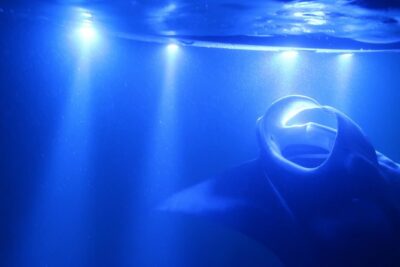
Kona is one of the rare places where you can watch manta rays feed at night in a regular, well-known location. The animals gather around lights placed in the water, since those lights attract plankton. You float at the surface while the rays make slow passes below you.
This is not a show with trained animals. The mantas are wild, and their movements are their own. Some nights bring only a few animals. Other times, several rays may circle at once. One account described six large mantas beneath the group, while another recalled nine feeding together. A different outing reportedly produced an astonishing 20 to 30 rays.
That range matters. You cannot book a guaranteed number of manta rays, and you should not expect the exact same scene each night. The appeal is seeing wild animals choose to come close, not watching a fixed performance.
The animals can reach a wingspan of about 16 feet, yet they are often graceful rather than frightening. Their broad wings move in slow, smooth turns as they feed. You are asked not to touch them, even if one passes close enough to brush against you.
More Whale Shark and Manta Ray Snorkeling in the USA:
- Big Island Manta Ray Night Snorkel
★ 5.0 · 5,656 reviews - Big Island: Kona Manta Ray Snorkel Tour in Keauhou Harbor
★ 4.5 · 2,465 reviews - KONA Manta Ray Night Snorkel – FREE re-ride if no Sightings
★ 5.0 · 2,212 reviews
Leaving Honokohau Harbor after sunset
The meeting point is on the north side of Honokohau Small Boat Harbor at 74 Kealakehe Parkway. Search for Snorkel Big Island in Google Maps, since the full harbor area can be confusing.
From Highway 19, turn west toward the ocean at the sign for Honokohau Marina and Small Boat Harbor. Take the first right into the north side of the harbor, follow the road around the bend, and pass Gentry’s gas station on your left.
Continue to the end and park near Kona Sailing Club. Do not enter or disturb the club. The captain meets you by the Snorkel Big Island black Ram 2500 truck. If the previous trip is still out, the captain may be on the boat, so arrive on time and allow a little patience at the meeting spot.
This is a working harbor rather than a polished resort dock. That suits the experience. You are heading out with a small family business, not stepping into a big entertainment complex. The practical advice is to use the directions carefully, arrive early enough to find parking, and bring only what you need.
The 15 to 25 minute ride to the feeding site
Once aboard, you travel roughly 15 to 25 minutes to the snorkeling area. The boat is described as spacious and comfortable, but you are still on the open ocean, and conditions can change.
Some outings have included a sunset view on the way out. The return ride may offer stars and a very different mood. At night, though, the water is dark, and the ride can feel rough. One person specifically noted the darkness on the trip out and back, while another found the ride quite bumpy.
If you are uneasy on boats, take that seriously. The crew can guide you, but they cannot remove the motion of the sea. A calm attitude, sensible expectations, and a willingness to follow instructions will help.
The crew is a major part of the experience. Names connected with recent trips include Captain John, John Junior, Julia, Johnnie, Jay, Bradley, Elijah, Hunter, Sawyer, and Captain Kelly. The exact crew will vary, but the pattern is clear: the business is family-operated, and the team takes pride in getting people into the right position while keeping the mood relaxed.
At least 35 minutes beneath the lights
At the site, you put on the provided shorty wetsuit and snorkel equipment before entering the water. The wetsuit adds warmth and buoyancy, which can make a big difference during a night swim.
You generally hold onto a floating board or the boat’s designated support while looking down into the illuminated water. An in-water guide stays with the group, explains how to behave around the mantas, and helps you remain calm. That person is especially useful if the first few minutes feel strange. Night snorkeling removes your usual visual reference points, and the open sea can feel much larger than it does in daylight.
You should receive at least 35 minutes of snorkeling time. Several accounts describe around 30 minutes or more with the rays, so the advertised water time is a meaningful part of the trip rather than a quick look.
The best moments can happen without warning. A manta may appear from the dark, turn beneath you, and rise toward the lights. Another may circle back repeatedly. One animal called Nick became a familiar presence during one outing because it kept returning to the group.
The rays may pass close, but you must let them set the distance. Do not reach toward them or try to guide their movements. The most rewarding behavior is often simply staying still and allowing the animals to move naturally around you.
More Night Snorkeling Trips in the USA:
- Manta Ray Night Snorkel at Kona, Big Island
★ 5.0 · 1,758 reviews - Glow of the Deep: Night Snorkeling with Manta Rays
★ 4.5 · 1,254 reviews - Manta Magic: Small-Group Manta Ray Night Snorkel in Kailua Kona
★ 5.0 · 1,141 reviews - Manta Ray Night Snorkel in Kona
★ 5.0 · 777 reviews
What the crew adds to the night
A good guide matters more here than on a casual daytime swim. You need clear instructions before entering the water, calm direction once you are floating, and useful information while the mantas are feeding below.
The crew has been praised for explaining how to avoid harming the rays and for sharing information about their behavior during the encounter. The in-water guide also helps with basic comfort and safety. That is valuable because the sight of a large animal moving straight toward you can trigger a natural urge to kick away.
Some outings have included videos taken by the guide and shared afterward, sometimes by phone or AirDrop. That is a welcome bonus, but you should not rely on it as part of the formal package. Bring your own GoPro or underwater camera if recording the encounter matters to you.
The crew may also offer water, snacks, or hot chocolate after you leave the water. Hot chocolate is a small touch, but it makes sense after a cool night swim. The simple comforts help turn the return trip into a pleasant wind-down rather than a cold ride back to the harbor.
How the small boat changes the experience
This tour is appealing if you prefer a personal setting. Groups have sometimes been as small as six, while other trips have included about 10 to 20 people. The exact number depends on the departure, but the boat is not described as a giant platform packed with a large crowd.
A smaller group can make it easier to hear the guide, ask questions, and find a comfortable place at the water. It may also reduce the feeling of being part of a mass activity. One family described choosing this sort of understated company instead of a larger boat and appreciated having a guide in the water.
There is a tradeoff. A smaller boat may feel more exposed to the ocean, especially on a rough ride. It may also offer fewer amenities than a large vessel. If your priority is a quiet group and direct contact with the crew, that trade is likely worthwhile. If you want lots of room, extensive onboard facilities, or the most stable platform possible, compare boat styles before choosing.
Is $137 a fair price?
At $137 per person, this is not a cheap add-on. It is a specialized evening outing that includes the boat ride, equipment, shorty wetsuit, in-water guide, and at least 35 minutes at the manta site.
The value comes from the combination of access and guidance. You are not simply renting snorkel gear and hoping to find wildlife in the dark. The crew handles the boat positioning, lighting setup, safety process, and group management. That matters when the main attraction depends on placing people in the right spot and behaving properly around wild animals.
The price also includes the expertise of a captain and crew who know the local feeding areas. Conditions and animal behavior can never be controlled, but the team can make sensible decisions about where to go. One crew even traveled farther to improve the chances of seeing mantas during a particular outing.
I consider the cost reasonable if this is one of your main Big Island experiences. It is less appealing if you are unsure about swimming at night, uncomfortable on open water, or likely to leave the water quickly. In that case, the price buys an activity you may not enjoy fully.
Safety, fitness, and comfort limits
You need prior swimming and snorkeling experience. This is not an introductory lesson, and non-swimmers should not book it.
You must be able to climb a side boat ladder independently. That requirement is easy to overlook, but it is important after spending time in the water. People with back problems, heart problems, recent surgery, mobility restrictions, or other physical limitations should not assume the trip will be suitable.
Pregnant people are advised not to participate, though the operator can be contacted about exceptions. If you are uncertain, ask before paying rather than hoping the crew can make arrangements at the dock.
The crew is CPR and lifeguard certified, and an experienced guide is in the water. Those safeguards are reassuring, but they do not replace your own ability to swim, follow instructions, and handle the ladder.
You should bring swimwear. The tour supplies the snorkel equipment and shorty wetsuit. The night air and boat ride may feel cool after snorkeling, so a light cover-up could be useful, although it is not listed as required equipment.
Who will enjoy this most
I would recommend this tour to confident swimmers, first-time night snorkelers who are comfortable following instructions, families with older children who meet the swimming requirements, couples seeking a memorable evening, and anyone who wants a close wildlife encounter without a huge boat.
It is especially good for people who value personal attention. The family-run style, in-water guide, safety focus, and smaller groups create a more direct connection with the crew.
I would not choose it for a non-swimmer, someone recovering from surgery, a person who cannot climb a ladder, or anyone who dislikes boat motion. You should also think twice if darkness in the open ocean feels frightening rather than exciting.
The experience is best approached with patience. You may see one manta, several, or a whole gathering. The animals may arrive at once or take time to appear. Wild nature does not follow a schedule, and that uncertainty is part of the bargain.
Practical details that make the night easier
Arrive on time at the north side of Honokohau Harbor. The captain may still be finishing a prior trip, so do not wander into the Kona Sailing Club area looking for the boat.
Bring swimwear and consider an underwater camera. Several outings produced close views that people wanted to record, and the guides may capture video too.
Pay attention to the briefing about keeping your hands off the mantas. A close pass is exciting precisely because the animal chooses to come near. Give it room to move.
The tour is conducted in English. Cancellation is free up to 24 hours before departure for a full refund, and you can reserve now and pay later. Starting times vary, so check the available departure when you book.
Should you book the Kailua-Kona manta snorkel?
Book it if you are a capable swimmer and want one of the Big Island’s most unusual wildlife encounters. The combination of night water, illuminated plankton, sweeping manta rays, and a small family crew offers real value at $137, especially when you receive a long water session and solid safety support.
Skip it if you cannot manage the ladder, dislike rough boat rides, or need a fully assisted water activity. If you do go, keep your expectations flexible, listen to the guide, and let the mantas decide how close they come. That is how this becomes more than a quick photo stop. It becomes a rare chance to share the water with wild animals on their terms.
FAQ
How long does the manta ray tour last?
The full experience lasts two hours. The boat ride takes about 15 to 25 minutes each way, and you receive at least 35 minutes of snorkeling time.
Where does the tour depart?
It departs from the north side of Honokohau Small Boat Harbor at 74 Kealakehe Parkway, Kailua-Kona. Search Google Maps for Snorkel Big Island to find the correct side of the harbor.
What equipment is provided?
Shorty wetsuits and snorkel equipment are provided. You need to bring swimwear.
Do I need swimming and snorkeling experience?
Yes. Prior swimming and snorkeling experience is required. Non-swimmers should not book this activity.
Can I join if I have mobility limits or recent surgery?
The activity is not recommended for people with back problems, heart problems, recent surgery, or mobility and physical restrictions. You must also be able to climb the boat’s side ladder independently.
Is the tour suitable during pregnancy?
Pregnant people are not generally advised to participate. Contact the tour operator to ask about any possible exception.
What happens if I need to cancel?
You can cancel up to 24 hours before the tour for a full refund. The reserve-now, pay-later option also lets you hold a place without paying immediately.
Just added around the USA
- Boca Raton Premium Jet Ski Tour – Optional Snorkeling/Lighthouse★ 5.0 · 9 reviews
- Waikoloa Catamaran Snorkel Sail Including Lunch★ 4.5 · 105 reviews
- 2-Hour Dolphin Watching and Double Reef with Snorkel in Hawaii★ 5.0 · 23 reviews
- Ultimate Ocean Encounters Midday Snorkel★ 4.5 · 43 reviews
- Two Tank Morning Reef Dive and Snorkel★ 5.0 · 54 reviews
- Kona Luxury Catamaran Yacht Snorkel & Sail★ 5.0 · 40 reviews
- Sunset Cruise & Manta Night Snorkeling Charter★ 5.0 · 16 reviews
- Manta Ray Night Snorkel Tour in Kailua-Kona, Big Island★ 5.0 · 382 reviews
Whale Shark and Manta Ray Snorkeling, compared.
️Nusa Penida by Private Boat – Snorkeling 4 spots, Swim with Mantas + Land Tour
Read our review →
Kona Manta Ray Snorkel Tour in Keauhou Harbor
Read our review →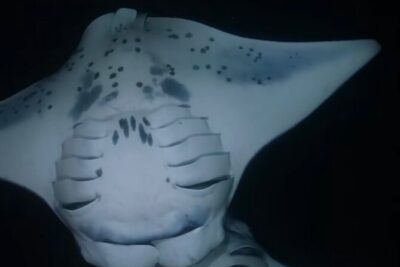
KONA Manta Ray Night Snorkel – FREE re-ride if no Sightings
Read our review →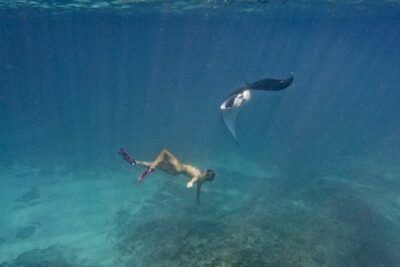
Nusa Penida day trip: boat, 4 snorkeling, Manta rays & Land tour
Read our review →
Bali/Nusa Penida: Manta Point Snorkeling & West Coast Tour
Read our review →
Glow of the Deep: Night Snorkeling with Manta Rays
Read our review →Browse the lists this tour appears in